
Longevity
Healthspan vs Lifespan
7 min read
Living long is not the same as living well. The distinction shapes every decision after forty.
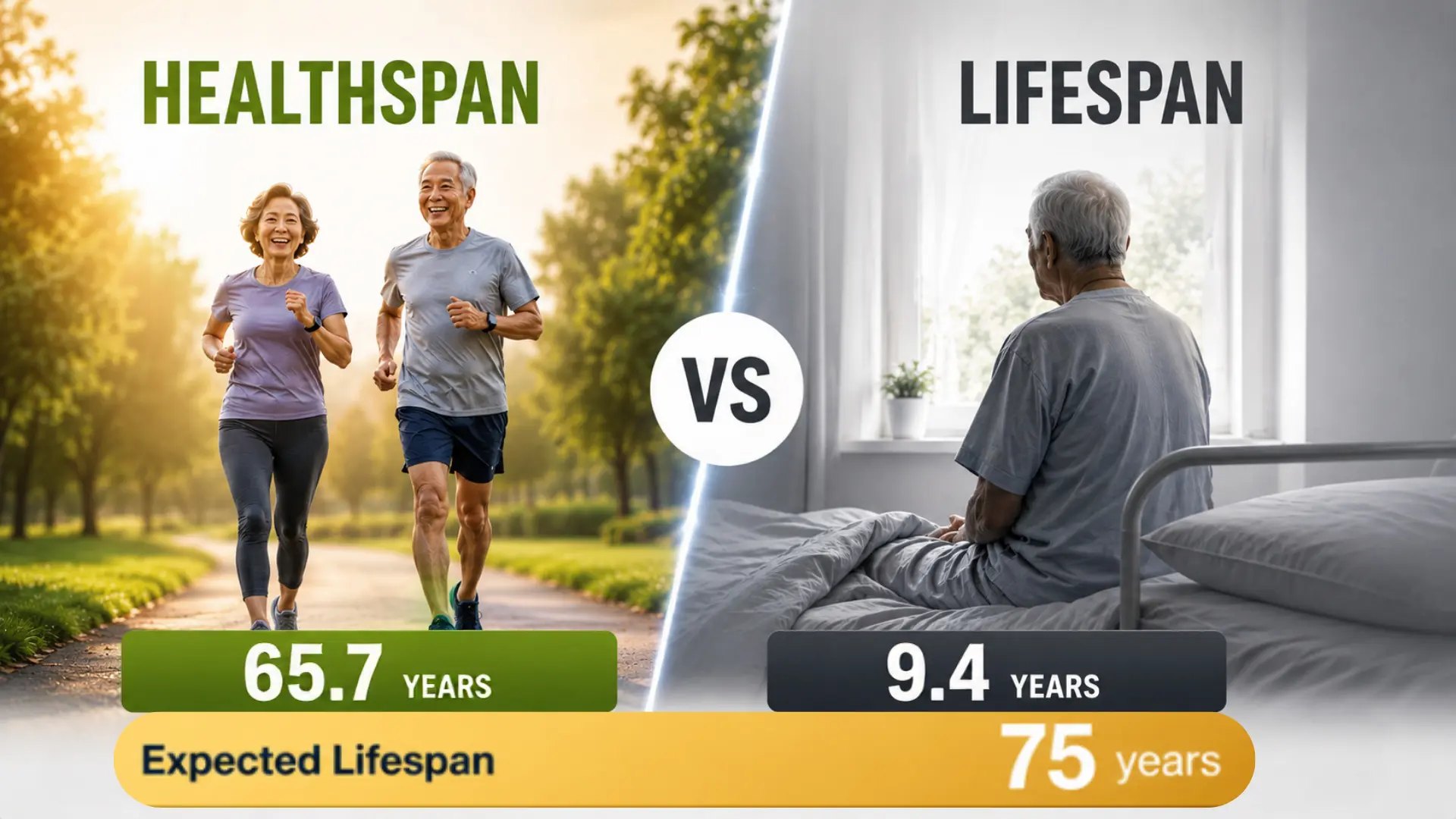
For most of modern history, medicine has measured success in years added. Vaccines, sanitation, and clinical advances have extended average lifespan dramatically over the past century. Yet somewhere along the way, a quieter question emerged: what are those extra years actually like?
Healthspan is the answer to that question. It refers to the portion of life spent in good function—able to walk without pain, sit and rise without assistance, sleep restfully, and pursue the activities that make daily life meaningful. Lifespan counts the years. Healthspan asks what those years contain.
The gap between the two is often larger than people expect. Many adults spend a decade or more of their later years managing chronic discomfort, reduced mobility, or dependence on others for basic tasks. Closing that gap has become one of the central pursuits of modern wellness thinking, and it starts with habits built well before symptoms ever appear.
Why It Happens
The body does not decline all at once. Instead, small losses accumulate quietly over years: modest reductions in muscle mass, gradual stiffening of connective tissue, subtle shifts in balance and coordination. Left unaddressed, these small changes compound, often becoming noticeable only once they begin to affect daily function.
Much of this decline is not inevitable in the way it was once assumed to be. Research into aging populations consistently points to modifiable factors—movement, strength, sleep, stress, and nutrition—as major contributors to how gracefully or difficultly those later decades unfold.

Everyday Habits That Contribute
Several everyday patterns tend to separate long healthspans from long, but difficult, lifespans:
- Regular movement, rather than occasional intense exercise
- Strength training that preserves muscle and supports the spine
- Consistent, quality sleep that allows for tissue recovery
- Balanced nutrition that supports bone and muscle maintenance
- Attention to spinal health and posture across the decades
- Practices that regulate stress and support nervous system balance
None of these require extremes. Many wellness professionals note that consistency, sustained over years, tends to matter more than intensity applied sporadically.
What Your Body Is Telling You
The body often signals early shifts in healthspan well before a diagnosis ever enters the picture. Stiffness after sitting, reduced balance on uneven ground, or fatigue after mild exertion can be early indicators worth paying attention to, not ignoring.
These signs are rarely a reason for alarm, but they can be a useful prompt to reassess daily habits—particularly around movement variety, recovery, and how much time is spent stationary versus active throughout a typical day.

Practical Daily Recovery Habits
Supporting healthspan does not require a complete lifestyle overhaul. Many people find success with small, sustainable adjustments:
- Standing and walking briefly every hour during sedentary work
- Incorporating mobility and stretching into morning or evening routines
- Prioritizing protein intake to support muscle maintenance
- Practicing balance exercises a few times per week
- Setting a consistent sleep schedule to support recovery
- Building in dedicated time for spinal and muscular relaxation
How Spine Care Supports Everyday Wellness
The spine is central to nearly every form of movement, from walking and bending to simply standing upright with ease. As the years accumulate, many people notice that spinal comfort and flexibility play an outsized role in how independent and mobile they feel day to day.
This is one reason spine-focused recovery routines have become a meaningful part of many healthy-aging strategies. Devices like the CERAGEM Master V4 are often used by individuals seeking a consistent way to support spinal relaxation and muscle recovery as part of a broader, proactive approach to aging well—not as a substitute for movement, but as a complement to it.
The goal is not simply to add years to life, but life to years.
Frequently Asked Questions
What is the difference between healthspan and lifespan?
Lifespan refers to the total number of years a person lives, while healthspan refers to the number of those years spent in good physical and mental function, largely free of chronic disability. Two people can share the same lifespan yet experience very different healthspans, depending on mobility, independence, and overall vitality in their later decades.
At what age should I start thinking about healthspan?
Many wellness researchers suggest that the habits formed in your thirties and forties often shape how the body ages decades later. Muscle mass, bone density, and spinal resilience tend to decline gradually if unaddressed, so earlier attention to movement, strength, and recovery may support a longer healthspan.
Can lifestyle changes really extend healthspan?
A growing body of research suggests that consistent movement, quality sleep, balanced nutrition, and stress regulation are strongly associated with sustained independence and function later in life. While no single habit guarantees an outcome, small daily choices compound meaningfully over years.
Why is spine and muscle health emphasized so often in healthy aging?
The spine supports nearly every movement the body makes, and surrounding muscles help stabilize posture, balance, and mobility. Many people notice that spine and muscle care becomes more central to comfort and independence as they age, particularly when it comes to daily tasks like standing, walking, and recovering from activity.
Is it too late to improve healthspan later in life?
Most wellness professionals agree that it is rarely too late to introduce supportive habits. Gentle movement, mobility work, and recovery-focused routines can often be adapted for nearly any age or ability level, and many people notice improvements in comfort and function after adopting consistent practices.
Key Takeaways
- Healthspan measures quality of function, while lifespan measures years lived.
- Small, consistent habits often matter more than occasional intense effort.
- Muscle and spinal health play a central role in maintaining independence.
- Early signs like stiffness or fatigue are worth noticing, not ignoring.
- Balance, sleep, and nutrition all contribute meaningfully to long-term function.
- Recovery-focused routines can complement, not replace, an active lifestyle.
A Closing Thought
The years ahead will arrive regardless of how they are approached. What varies is how much comfort, mobility, and independence those years contain. Building supportive habits now—around movement, recovery, and spinal care—may help ensure that added years remain years worth living well. Many people find that thoughtful tools, such as the CERAGEM Master V4, fit naturally into this long-term approach to wellness.