
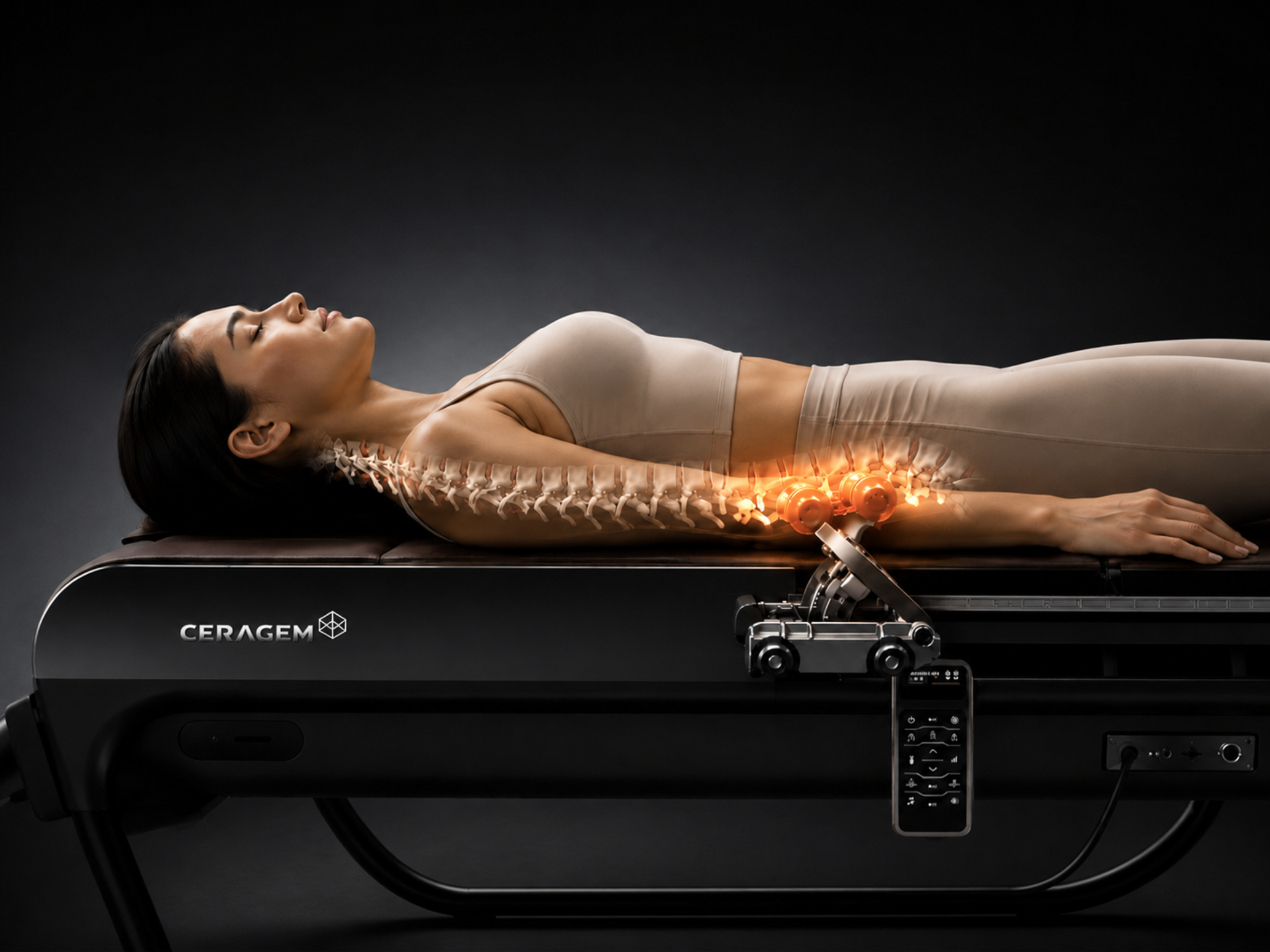
Back & Spine Care
Back & Spine Care: A Practical Guide to Everyday Spinal Comfort
Your spine is the structural centre of almost everything you do. It carries the weight of your head and torso, protects the nerve pathways that connect your brain to the rest of your body, and allows you to bend, twist, reach and rest. When it feels supported, you rarely think about it. When it doesn't, it quietly influences your mood, your sleep and your willingness to move.
This guide explains — in plain language — what happens to the spine during an ordinary Metro Manila day, why discomfort tends to build gradually rather than suddenly, and what a consistent care routine looks like. It is educational, not medical advice; persistent or severe pain always deserves a conversation with a licensed healthcare professional.
Key Takeaways
- Spinal discomfort is usually cumulative — the result of many small daily loads, not one dramatic event.
- Long static postures are harder on the spine than movement, even movement that feels effortful.
- Warmth, gentle traction and consistency are the three pillars of an at-home spine care routine.
- Forty minutes of intentional recovery can be more valuable than an hour of unfocused rest.
How the Spine Actually Works

The spine is a column of 33 vertebrae separated by discs that behave like soft, water-rich cushions. Those discs have no direct blood supply of their own. They rely on movement — the gentle compression and release that happens as you walk, stretch and change position — to draw in fluid and nutrients. This is why a body that moves regularly tends to feel more comfortable than a body that holds one position for hours.
Surrounding the column are deep stabilising muscles that work almost continuously, and larger surface muscles that create movement. When the deep stabilisers tire, the surface muscles take over jobs they were never designed to do all day. That substitution is what many people describe as tightness across the lower back or between the shoulder blades.
The Everyday Loads That Add Up

Very few people injure their back doing something extraordinary. Far more often, discomfort is the accumulated result of ordinary hours spent in positions the body tolerates but doesn't enjoy.
- Long desk sessions where the pelvis rolls backwards and the lower back loses its natural curve.
- Commutes in traffic, where the spine absorbs constant micro-vibration in a fixed seated position.
- Phone use with the head tilted forward, multiplying the effective load carried by the neck and upper back.
- Sleep surfaces that no longer support the natural alignment of the hips and shoulders.
- Weekend activity spikes — a sudden round of golf or a heavy gym session after five sedentary days.
Reading Your Body's Early Signals

The body rarely goes from comfortable to painful without warning. It sends smaller signals first: stiffness in the first few minutes after standing, a need to shift position more often, a dull ache that appears late in the afternoon, or a sense that one side of the body is working harder than the other.
Treating those early signals as information rather than inconvenience is one of the most useful habits in spine care. A ten-minute response today is almost always simpler than a three-week response later.
Building a Daily Spine Care Routine

A sustainable routine is short, repeatable, and attached to something you already do. Consistency matters far more than intensity.
- Morning: two or three minutes of gentle spinal movement before you reach for your phone.
- Every 45–60 minutes: stand, breathe, and let the spine lengthen for 60 seconds.
- Midday: a short walk, ideally outdoors, to restore natural rhythm and circulation.
- Evening: warmth applied across the back to help muscles release before sleep.
- Weekly: one longer, intentional recovery session where the only task is to let the body reset.
Why Warmth and Gentle Traction Help

Warmth encourages soft tissue to become more pliable and invites tight muscles to release rather than resist. Gentle traction — a light lengthening of the spine — creates space and allows the body to settle into a more neutral alignment without force.
This combination is the foundation of traditional Korean ondol-style warmth, and it is the principle behind modern thermal spine wellness. Neither is a treatment for a diagnosed condition. Both are ways of supporting the body's own recovery process, which is why they suit daily use.
How the CERAGEM Master V4 Supports Spine Care
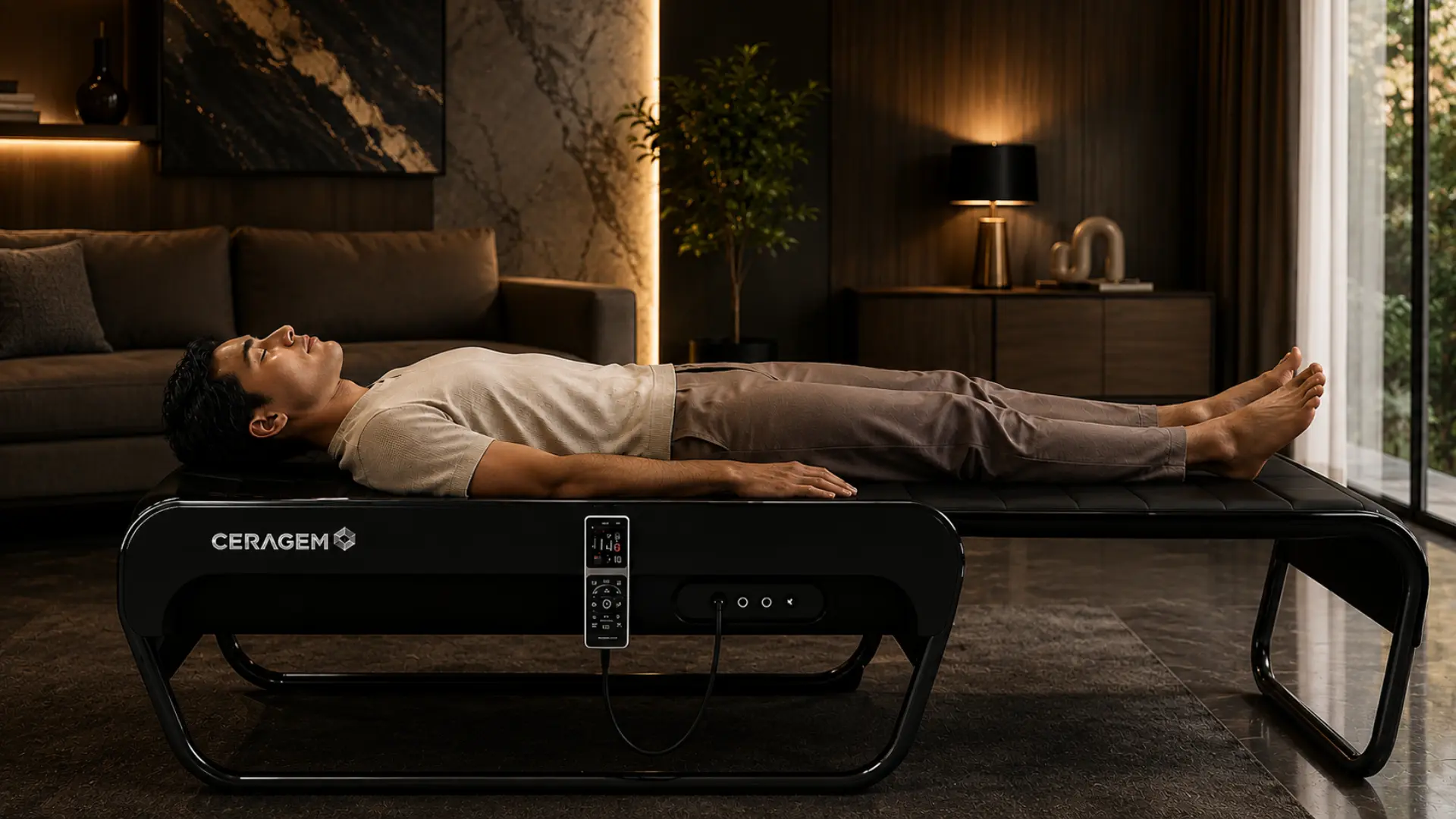
The CERAGEM Master V4 was designed around a single idea: recovery should be personalised, and it should be effortless enough to repeat. The session begins with an intelligent spine scan that maps the length and curvature of your back, so the massage path follows your anatomy rather than a generic template.
From there, ceramic thermal rollers travel along the spine, combining warmth with gentle acupressure. Automated stretching guides the body through a light, controlled lengthening, while lower-body and shoulder modules extend the experience beyond the back alone. The full session lasts around 40 minutes — long enough for the nervous system to shift into a genuinely restful state, short enough to fit into a real week.
At the CERAGEM Shaw Wellness Lounge in Mandaluyong, first-time guests are welcome to experience this in a private room with a wellness specialist guiding the session from start to finish.
Frequently Asked Questions
How often should I do a spine care session?
For most people, two to three intentional recovery sessions a week, paired with short daily movement breaks, is a realistic and effective rhythm. Consistency delivers more benefit than occasional long sessions.
Is warmth better than cold for a tight back?
Warmth is generally more comfortable for chronic tightness and everyday stiffness because it encourages tissue to relax. Cold is more often used immediately after an acute injury. If you are unsure which applies to you, ask a licensed healthcare professional.
Can I use a thermal massage bed if I sit all day?
Yes — desk-based workers are among the most common guests at our lounge. A thermal session directly addresses the stiffness that builds from long static sitting.
Will one session fix my back?
No single session changes a pattern built over years. What one session does is show you how your body responds, which makes it much easier to design a routine that works for you.
Back and spine care is not a project with an end date. It is a set of small, repeatable choices — move often, sit better, apply warmth, and give your body a proper reset each week. Do those consistently and the spine tends to look after itself.
This article is educational and does not constitute medical advice. For persistent or severe symptoms, please consult a licensed healthcare professional.
The Next Step
Experience the CERAGEM Difference.
Reading about wellness is the first step. Experiencing it is something entirely different.
Visit the CERAGEM Shaw Wellness Lounge and discover how intelligent spine scanning, thermal massage, automated stretching, and personalized wellness technology come together in one relaxing 40-minute session.
Whether you're looking to improve your daily wellness routine, unwind after work, or simply invest in better self-care, our wellness specialists will guide you through the experience.
- First-time visitors welcome
- Personalized wellness consultation
- Premium private wellness lounge
- No pressure to purchase
Continue Your Wellness Journey

Pain Relief & Recovery
Recovery isn't the absence of activity — it's an active process. A guide to helping your body reset after physical and mental demands.
Read Article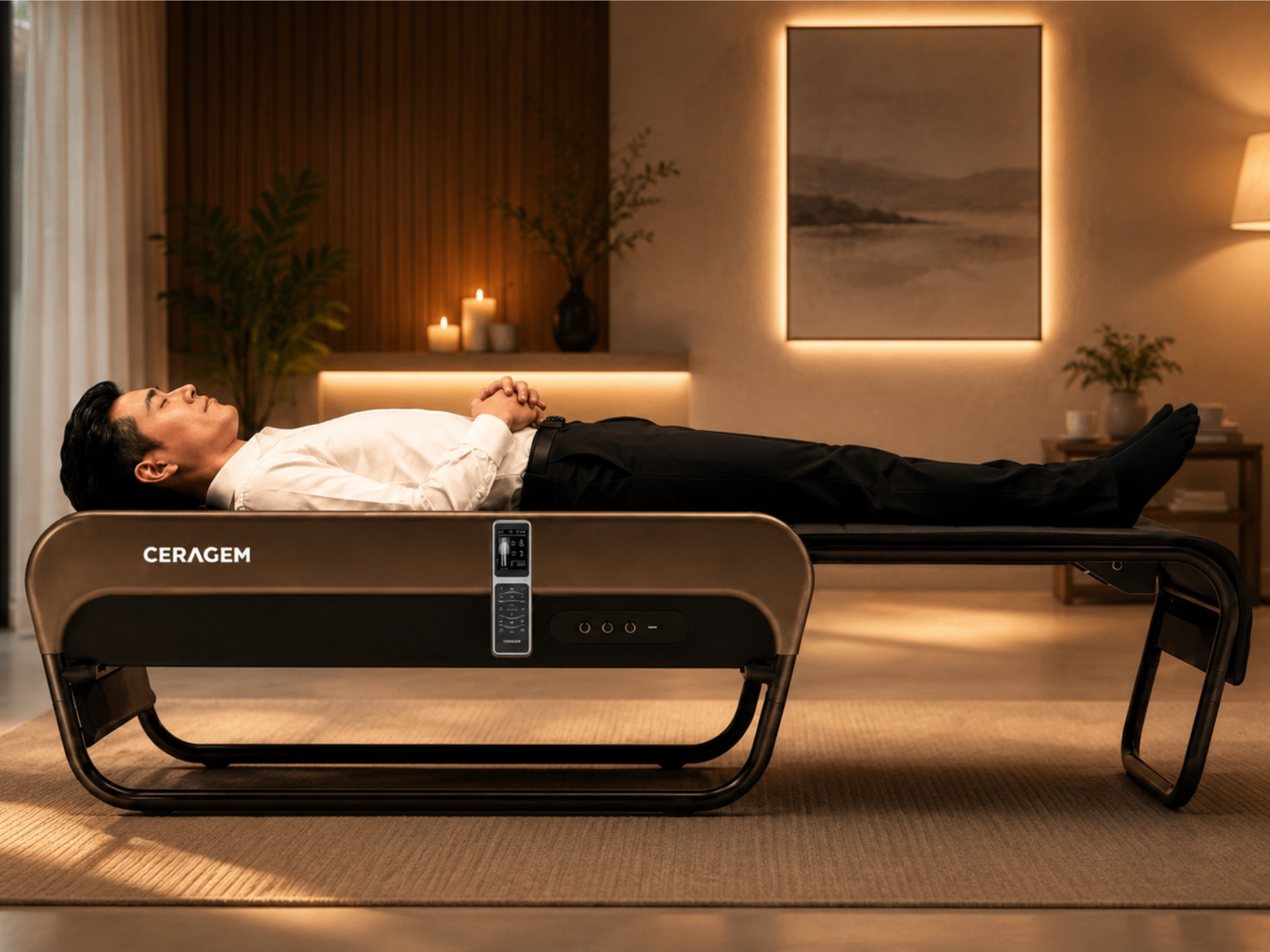
Relaxation & Stress Relief
Stress lives in the body as much as the mind. How warmth, breath and quiet help the nervous system return to a calmer baseline.
Read Article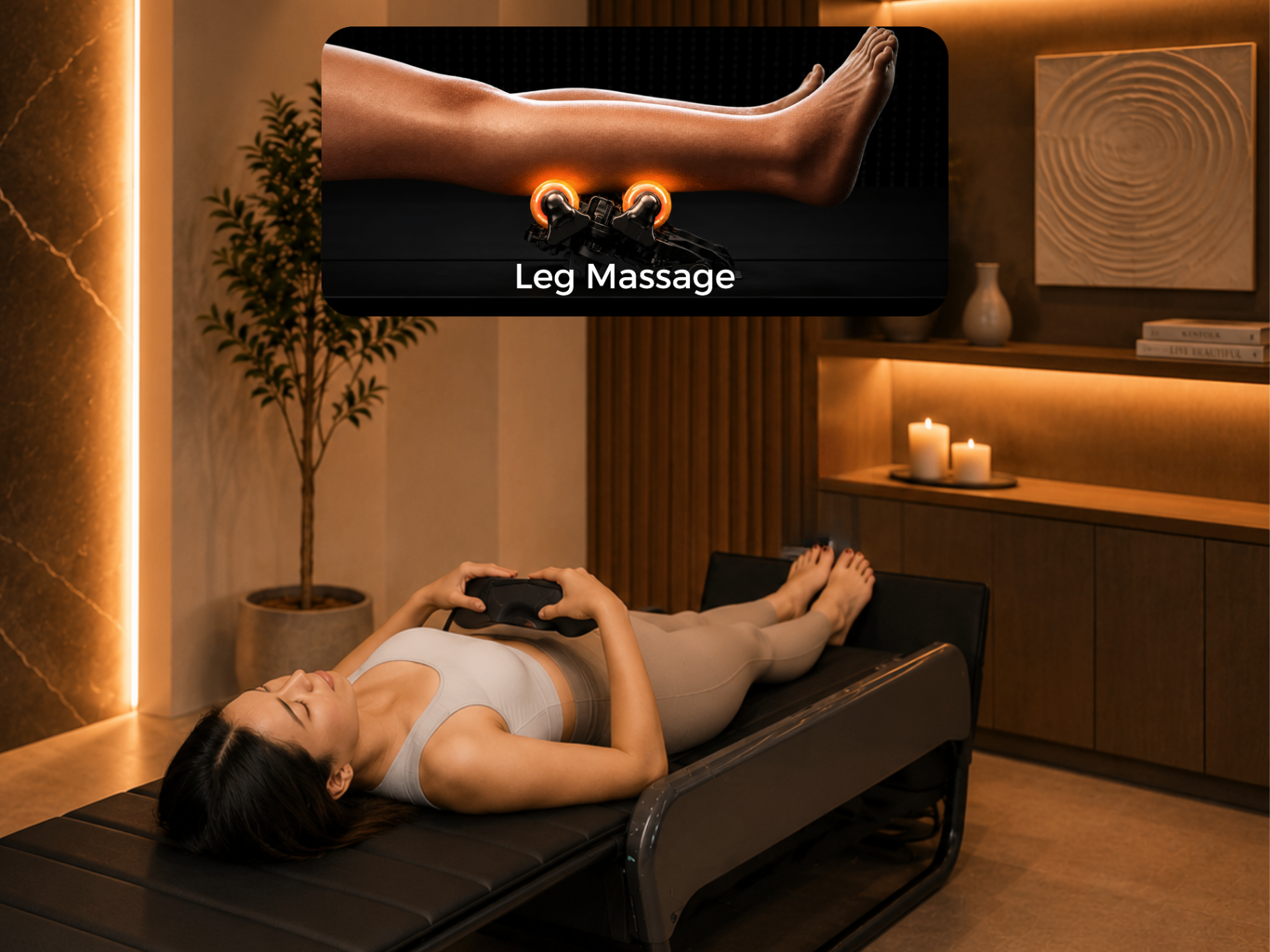
Circulation & Leg Care
Heavy legs at the end of the day are common — and largely addressable. A guide to circulation, lower-body comfort and everyday habits.
Read Article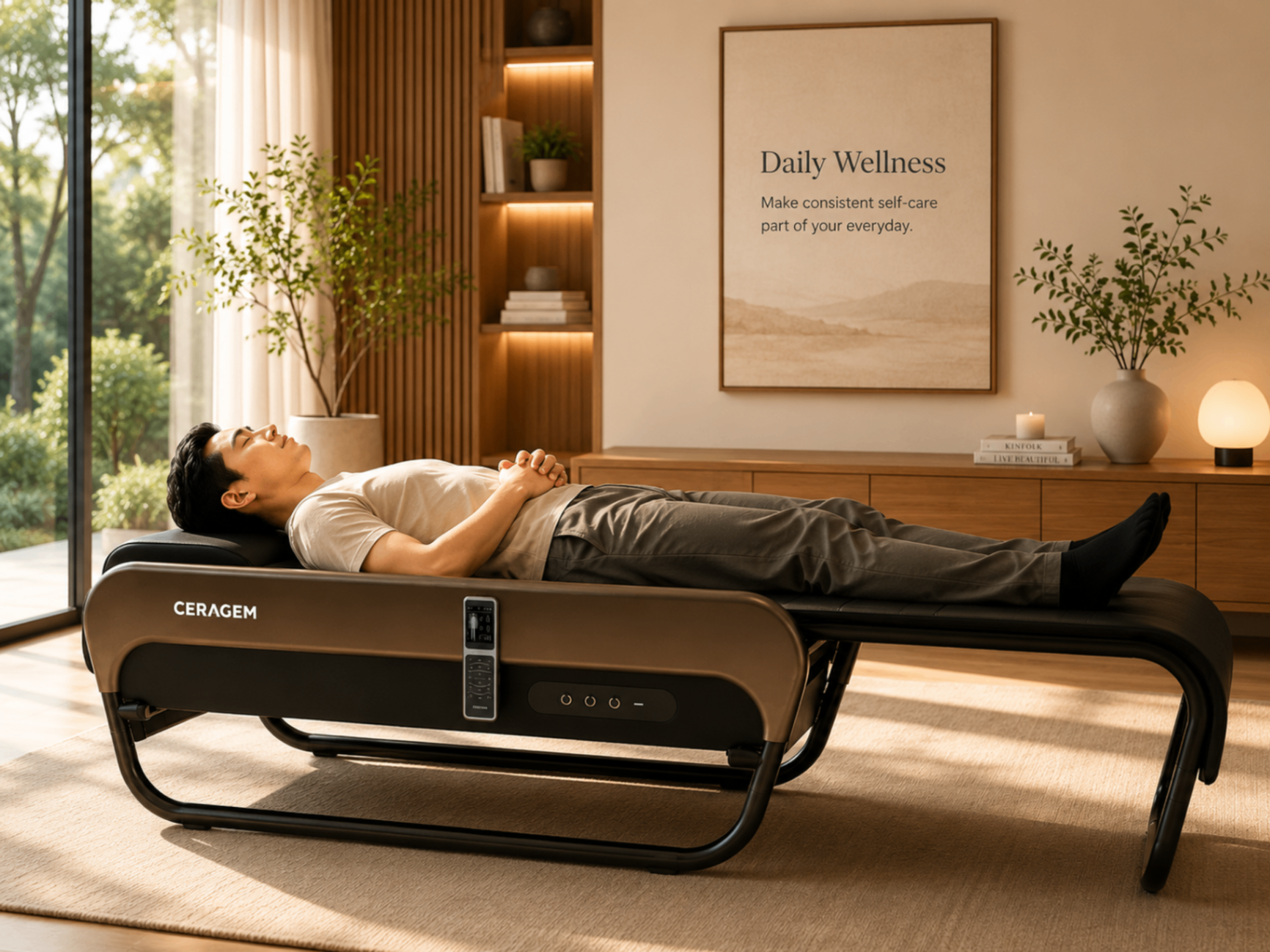
Daily Wellness
Wellness is what you repeat, not what you occasionally attempt. A practical framework for building a routine that survives a busy week.
Read Article
Flexibility & Mobility
Flexibility and mobility aren't the same thing — and knowing the difference changes how you train, stretch and recover.
Read Article